Table of Contents
When we think about building strong bones, calcium is usually the first nutrient that comes to mind. While calcium provides the essential minerals your skeleton needs, it cannot do the job alone. Your bones are living, active tissues made up of a complex matrix, and nearly half of their total volume is composed of protein. Ensuring you receive adequate daily protein is just as vital as getting enough sunshine and calcium.
Understanding the deep connection between protein and bone health empowers you to nourish your body at every stage of life. Whether you are supporting growing children, maintaining an active adult lifestyle, or protecting your mobility in senior years, a well-rounded diet makes all the difference.
Understanding the Link Between Protein and Bone Health
Your skeleton is constantly renewing itself through a natural cycle of rebuilding and breakdown. Protein supplies the structural foundation, specifically collagen, which forms the flexible framework of your bones. Calcium then binds to this matrix to give bones their density and strength.
Without adequate protein intake, your body cannot efficiently build or repair bone tissue. Protein also plays a critical role in supporting muscle mass. Strong muscles help stabilize your joints, improve your balance, and protect your skeleton from accidental falls and fractures. When you prioritize protein alongside key vitamins and minerals, you support a resilient frame that keeps you moving comfortably.
Essential Foods for Strong Bones and Overall Wellness
Eating a balanced variety of whole foods is the most effective way to care for your frame. When planning your meals, focus on incorporating diverse, nutrient-dense ingredients that offer structural support for your body.
Here are some of the foods for strong bones that you can easily integrate into your daily routine:
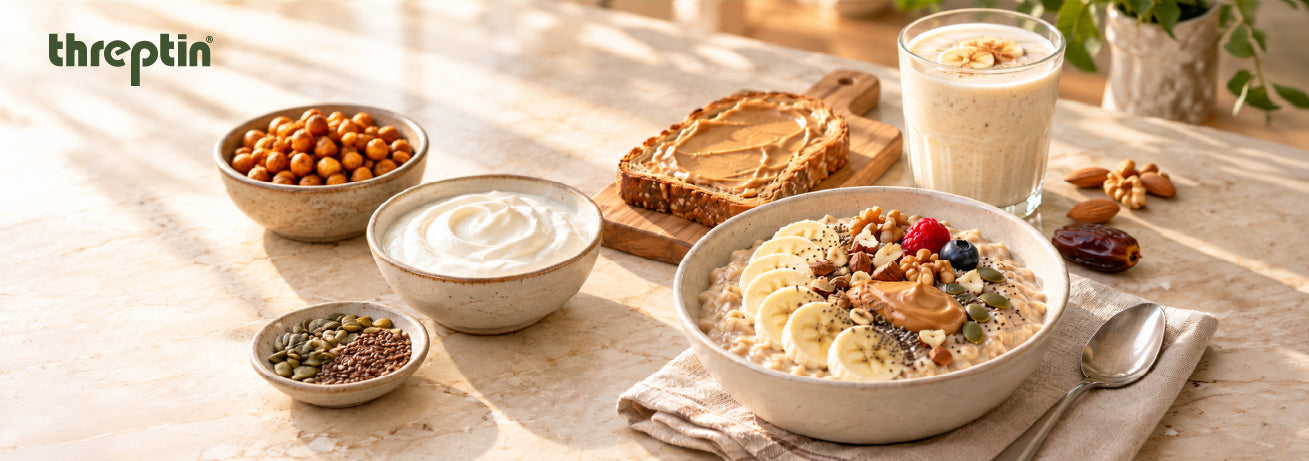
- Dairy Products: Milk, yogurt, and paneer are classic options that naturally combine calcium, phosphorus, and high-quality protein.
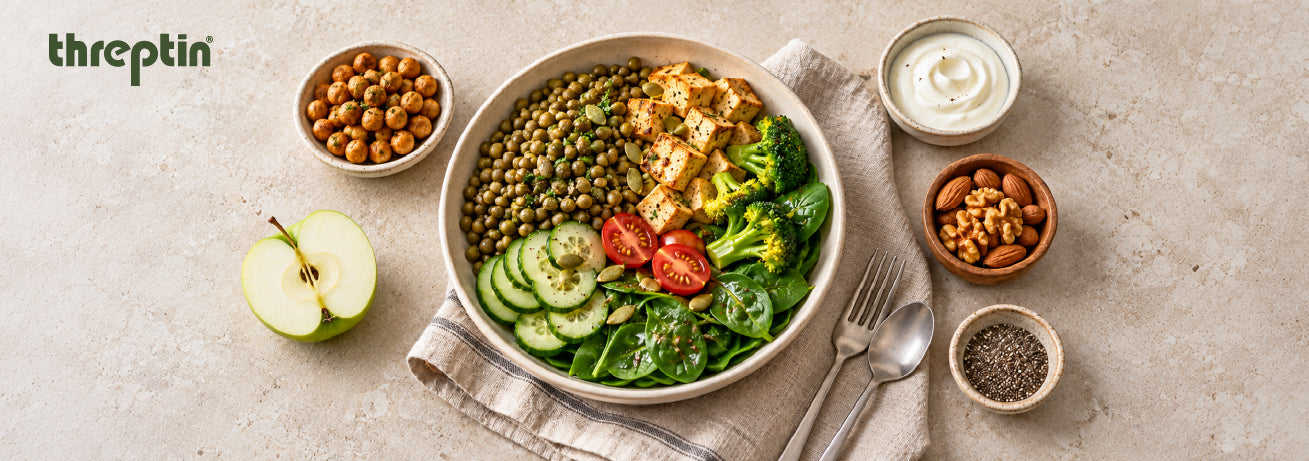
- Leafy Green Vegetables: Spinach, kale, bok choy, and broccoli provide calcium, magnesium, and vitamin K, which help bind minerals to the bone matrix.
- Legumes and Pulses: Lentils, chickpeas, and beans are excellent plant-based sources of protein, fiber, and essential minerals like magnesium.
- Nuts and Seeds: Almonds, chia seeds, and sesame seeds offer healthy fats along with bone-supporting minerals.
- Nourishing Snacks: When you are on the go, convenient options like Threptin diskettes provide a reliable source of high-quality casein protein to bridge nutrition gaps between your main meals.
Taking care of your skeleton often goes hand-in-hand with caring for the rest of your body. In fact, many nourishing ingredients that protect your skeleton are also recognized among the best foods for heart health, including leafy greens, nuts, and clean protein sources that promote overall vascular and systemic strength.
Balancing Calcium and Protein-Rich Foods for Daily Strength
To maximize bone density, your body needs nutrients that work in synergy. Calcium provides the hardness, while protein provides the flexibility and structural integrity.
Focusing on calcium and protein-rich foods ensures that your digestive system can absorb and utilize these nutrients effectively. For optimal results, aim to spread your protein intake evenly across breakfast, lunch, dinner, and mid-day snacks rather than consuming it all in a single heavy meal.
For those seeking non-meat options, incorporating complete protein foods, which supply all nine essential amino acids, is crucial for supporting tissue repair. Dairy products, soy, quinoa, and carefully formulated protein supplements provide complete amino acid profiles that help maintain steady bone rebuilding throughout the day.
Targeted Nutrition and Protein for Osteoporosis Management
As we age, bone density naturally declines. For older adults and postmenopausal women, maintaining skeletal strength becomes a top priority to prevent conditions like osteoporosis, where bones become brittle and fragile.
Dietary intervention plays a major protective role. Consuming sufficient protein for osteoporosis management helps preserve bone mineral density, reduces the rate of bone loss, and maintains muscle strength to lower fall risks.
Adopting a supportive bone health diet does not require complex meal plans or drastic lifestyle overhauls. Small, consistent choices make a significant impact:
- Add a serving of curd or paneer to your lunch.
- Enjoy a handful of soaked almonds with your morning tea.
- Include legumes or sprouts in your evening salad.
- Keep a reliable protein snack accessible during busy workdays.
Building Your Long-Term Bone Health Diet
Creating a sustainable routine is about consistency rather than perfection. By selecting the best foods for bone strength and combining them with moderate daily exercise, such as walking or weight-bearing activities, you give your body the tools it needs to remain resilient.
If you find it challenging to meet your daily dietary requirements through traditional meals alone, choosing trusted nutritional support can simplify your journey. Looking for the best protein brand in India can lead you to time-tested, quality options like Threptin protein diskettes, which has helped families satisfy their daily protein needs across generations.
Nourishing your bones is a lifelong investment in your independence, mobility, and vitality. Start making small, protein-rich additions to your plate today, and give your frame the strength it deserves.